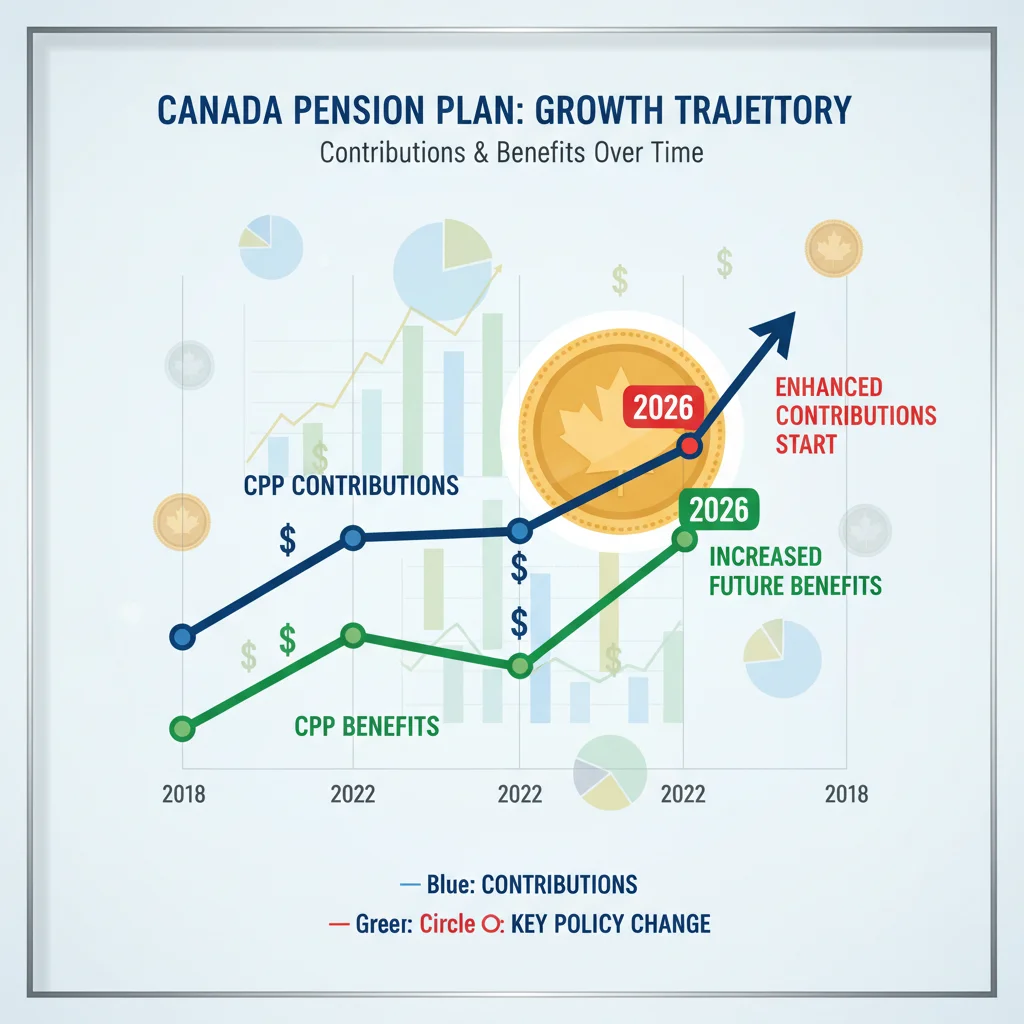
Canada Pension Plan 2026: What You Need to Know Now
The Canada Pension Plan (CPP) is undergoing significant changes, particularly for 2026. This comprehensive article explains the upcoming adjustments to contributions, benefits, and eligibility, helping Canadians understand the impact on their financial future and retirement planning.
By: pedropadm2025@gmail.com on August 22, 2026
Última atualização em: agosto 24, 2026
The Canada Pension Plan (CPP) is a cornerstone of retirement security for millions of Canadians. As we look towards the future, it’s crucial to understand the latest changes to the Canada Pension Plan (CPP) for 2026 and beyond. These updates are designed to enhance the plan’s sustainability and provide greater benefits, but they also introduce new considerations for both employees and employers.
Navigating these adjustments can seem complex, but grasping the core elements is key to effective financial planning. Whether you’re nearing retirement or just starting your career, the evolving CPP framework will undoubtedly influence your financial outlook. This article will break down the most significant modifications, helping you prepare for what’s ahead and make informed decisions about your pension and overall financial strategy.
Understanding the Enhanced CPP Program
The Canada Pension Plan enhancement began in 2019, marking a significant shift in how Canadians save for retirement. This enhancement was introduced to increase the amount of income people receive in retirement, helping them better meet their living expenses as costs rise. Before this enhancement, the CPP aimed to replace about one-quarter of a worker’s average earnings up to a certain maximum. The enhanced CPP is gradually increasing this to one-third, which means future retirees will receive a more substantial pension.
This phased approach allows for a smoother transition for both contributors and the system itself. The changes involve gradual increases in contribution rates and the introduction of a second earnings ceiling. This ensures that the system remains robust and capable of delivering on its promises for generations to come. Many Canadians might not have noticed the changes immediately, as they were designed to be incremental, but their long-term impact is profound for anyone contributing to or receiving benefits from the CPP.
The primary goal of the enhanced CPP is to address concerns about future retirement security given longer life expectancies and changing economic landscapes. By bolstering the plan now, the government aims to reduce reliance on other forms of retirement savings and ensure a more comfortable retirement for all. Understanding this foundational shift is essential before diving into the specific adjustments slated for 2026, as these upcoming changes build directly upon the enhanced program that is already in motion.
Key Changes to Contribution Rates for 2026
For 2026, Canadians will see further adjustments to their Canada Pension Plan contributions, primarily due to the ongoing enhancement of the program. These changes affect both employees and employers, as well as self-employed individuals. The contribution rate is applied to earnings between a basic exemption amount and a yearly maximum pensionable earnings (YMPE). The most notable change for 2026 will be the continued implementation of the second additional CPP contribution (CPP2).
The CPP2 was introduced to cover earnings above the traditional YMPE, up to a new, higher threshold called the Year’s Additional Maximum Pensionable Earnings (YAMPE). This means that individuals earning above the YMPE will contribute more, and in turn, will receive higher CPP benefits in retirement. The YAMPE is set to increase each year, ensuring that more of a worker’s earnings are considered for pension calculation. For 2026, the specific rates and thresholds will be finalized closer to the year, but the direction of these changes is clear: a higher percentage of earnings will be subject to CPP contributions for higher earners.
These increased contributions are essential to fund the enhanced benefits that will be paid out in the future. While it means a slightly larger deduction from paychecks for some, it also translates into a more robust retirement income. It’s important for individuals to review their pay stubs and understand how these new rates are applied. Employers also need to ensure their payroll systems are updated to accurately reflect these adjustments. The goal is to create a more equitable system where those who earn more contribute more, and subsequently, receive more in retirement benefits from the Canada Pension Plan 2026.
Impact on Retirement Benefits and Eligibility
The changes leading up to and including 2026 will significantly impact the retirement benefits Canadians can expect to receive from the Canada Pension Plan. As the enhanced CPP fully phases in, future retirees will see a higher replacement rate for their earnings. Instead of replacing approximately one-quarter of average career earnings, the enhanced CPP aims to replace one-third. This means a more substantial monthly pension cheque for those who have contributed to the enhanced plan for a sufficient period.
However, it’s crucial to understand that the full impact of these higher benefits will primarily be felt by those who contribute to the enhanced CPP for many years. Individuals nearing retirement who have only contributed for a short period under the new rules will see a smaller increase in their benefits compared to younger workers. The benefits are calculated based on a lifetime of contributions, so the longer you contribute under the enhanced rules, the greater your eventual pension will be. Eligibility rules for starting CPP benefits, such as the earliest age of 60 and the standard age of 65, generally remain the same. However, delaying your application past 65 will continue to result in higher monthly payments, while taking it earlier will mean reduced payments.
The additional contributions made through CPP2, on earnings above the YMPE, will also translate into a new, second component of your CPP retirement pension. This means that higher earners will not only contribute more but will also receive a proportionately higher benefit from these additional contributions. This dual-component structure ensures that the enhanced benefits are directly linked to the enhanced contributions. Understanding these nuances is vital for accurate retirement planning and for setting realistic expectations about your future income from the Canada Pension Plan 2026.
Planning Your Retirement with CPP 2026 in Mind
Effective retirement planning requires a clear understanding of all your income sources, and the Canada Pension Plan 2026 changes make it even more important to review your strategy. With the enhanced benefits gradually rolling out, it’s a good time to reassess how CPP fits into your overall financial picture. For many, CPP will form a significant part of their retirement income, but it’s rarely enough on its own. Therefore, integrating these new CPP projections with your other savings, such as RRSPs, TFSAs, and employer pension plans, is crucial.
Consider using online CPP benefit calculators provided by Service Canada to get an estimate of your future benefits. These tools can help you visualize the impact of your contributions and how the enhanced CPP might affect your specific situation. Remember that these are estimates, and actual benefits will depend on your complete earnings history. For those who are self-employed, the increased contribution rates mean a larger portion of their income needs to be set aside for CPP. This requires careful budgeting and financial discipline to ensure compliance and maximize future benefits.
Key Considerations for Financial Planning:
Review Your Contribution Statement: Regularly check your Statement of Contributions from Service Canada to ensure your earnings are accurately recorded and that you’re receiving credit for all your contributions.
Assess Your Retirement Goals: Re-evaluate your desired retirement lifestyle and determine if your current savings, combined with projected CPP benefits, will be sufficient to meet those goals.
Consult a Financial Advisor: A professional can help you understand the intricacies of the CPP changes and integrate them into a comprehensive financial plan tailored to your individual needs and circumstances.
Understand Integration with Other Pensions: If you have an employer pension plan, understand how it coordinates with CPP benefits, as some plans might adjust their payouts based on your CPP entitlement.
By proactively addressing these areas, you can ensure that the changes to the Canada Pension Plan for 2026 work in your favour, providing a more secure and comfortable retirement.
Who Benefits Most from the Enhanced CPP?
The enhanced Canada Pension Plan is designed to benefit a broad range of Canadians, but certain groups will experience a more significant positive impact. Primarily, younger workers who will contribute to the enhanced CPP throughout their entire working lives stand to gain the most. These individuals will accumulate contributions under the new, higher rates and benefit from the increased replacement rate of one-third of average earnings, compared to the previous one-quarter. This long-term contribution means a substantially larger pension in their retirement years.
Another group that benefits significantly are higher earners. With the introduction of the Year’s Additional Maximum Pensionable Earnings (YAMPE), individuals earning above the traditional YMPE will contribute on a larger portion of their income. While this means higher contributions during their working years, it directly translates to a higher overall CPP benefit. This addresses a previous limitation where high earners found a smaller percentage of their income covered by CPP, providing them with more robust retirement security through the public plan.
Self-employed individuals, while bearing the full employer and employee portions of contributions, will also see increased benefits if they consistently contribute at the enhanced rates. Their commitment to paying both portions means they will also reap the full rewards of the larger pension payouts. Essentially, anyone who consistently contributes to the enhanced Canada Pension Plan over a long period, especially those with higher earnings, will experience a more substantial boost to their retirement income. This is a fundamental aspect of the Canada Pension Plan 2026 changes, aiming to provide greater support to those who contribute more throughout their careers.
Frequently Asked Questions
What is the main goal of the CPP enhancement?
The main goal of the CPP enhancement is to increase the amount of income Canadians receive in retirement. It aims to replace one-third of a worker’s average lifetime earnings, up from the previous one-quarter, thereby providing greater financial security in old age.
Will my CPP contributions increase every year until 2026?
The CPP enhancement involves gradual increases in contribution rates that began in 2019 and will continue to be phased in. While specific rates are set annually, the overall trend is an increase, particularly with the introduction of the second additional CPP contribution (CPP2) on higher earnings.
How does the Year’s Additional Maximum Pensionable Earnings (YAMPE) work?
The YAMPE is a new, higher earnings ceiling introduced by the enhanced CPP. It means that earnings above the traditional Year’s Maximum Pensionable Earnings (YMPE) but below the YAMPE will also be subject to CPP contributions (CPP2), leading to higher benefits for higher earners.
When will I see the full effect of the enhanced CPP benefits?
The full effect of the enhanced CPP benefits will primarily be seen by those who contribute to the enhanced plan for many years, ideally for their entire working life. Individuals already close to retirement will see some increase, but younger workers will experience the most significant boost to their retirement pension.
Do I need to do anything to start receiving enhanced CPP benefits?
No, you do not need to do anything specific. The enhanced benefits are automatically calculated based on your contributions throughout your working life. When you apply for your CPP retirement pension, the enhanced portion will be included if you have contributed under the new rules.
The Canada Pension Plan is undergoing a significant transformation, with the changes leading up to and including 2026 designed to strengthen its foundation and provide greater financial security for Canadians in retirement. Understanding these adjustments to contribution rates, the introduction of the YAMPE, and the resulting impact on future benefits is paramount for effective financial planning. While increased contributions might be noticeable on pay stubs for some, the long-term benefit of a more robust retirement income through the enhanced CPP is a crucial consideration.
Whether you’re a young professional just starting your career or nearing retirement, these changes will affect your financial landscape. Proactive engagement with your financial planning, reviewing your contribution statements, and potentially consulting with a financial advisor will help you navigate these updates successfully. The goal is to ensure that you are well-prepared to maximize your Canada Pension Plan benefits and achieve your desired retirement lifestyle. Stay informed, plan wisely, and secure your financial future under the evolving CPP framework.
pedropadm2025@gmail.com
Peter B holds a degree in Journalism and has 5 years of experience covering U.S. economic policy, labor markets, and financial news. He writes data-driven news content on topics like inflation, interest rates, and employment trends.