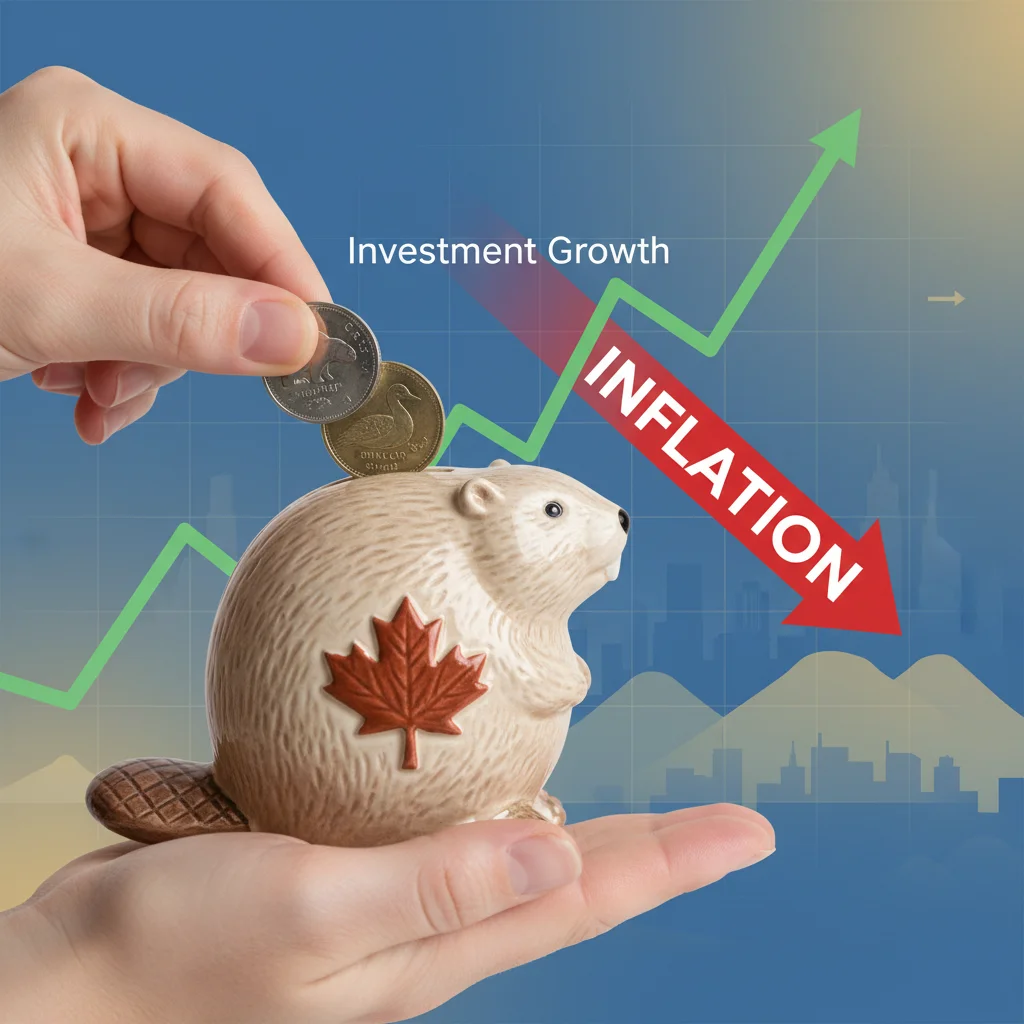
Protecting Canadian Retirement Savings from Inflation
Inflation can significantly erode Canadian retirement savings. This post explores the impact of a 3% annual loss and provides actionable strategies to mitigate risks, ensuring your financial security in retirement.
By: pedropadm2025@gmail.com on August 22, 2026
Última atualização em: agosto 24, 2026
Understanding the Impact of Inflation on Canadian Retirement Savings
Many Canadians diligently save for retirement, but a silent threat often goes overlooked: inflation. The Bank of Canada aims to keep inflation around 2%, yet even a modest 3% annual loss due to rising prices can significantly erode the purchasing power of your carefully accumulated Canadian retirement savings over time. This consistent decrease in your money’s value means that what seems like a comfortable nest egg today might not stretch as far as you anticipate in your golden years, making proactive planning essential.
It’s crucial to grasp how this seemingly small percentage can compound, turning a substantial sum into a less impactful one. For instance, if you have $500,000 saved, a 3% annual inflation rate means that in just one year, its purchasing power would be equivalent to approximately $485,000. Over decades, this erosion can become quite dramatic, potentially forcing retirees to adjust their lifestyle expectations or even return to work. Therefore, understanding the impact and implementing robust strategies to protect your Canadian retirement savings is not just advisable, but vital for long-term financial security.
The Silent Erosion: How 3% Inflation Affects Your Nest Egg
A 3% annual inflation rate might sound small, but its cumulative effect on Canadian retirement savings is profound. Over 10 years, a dollar loses roughly 26% of its purchasing power. Over 20 years, it’s closer to 45%, and over 30 years, more than 59%. This means if you are 35 today and plan to retire at 65, your current savings will buy less than half of what they could today, unless those savings are growing at a rate that at least matches inflation. This silent erosion is why simply saving money in a low-interest account is insufficient; your money needs to work harder than inflation.
Consider a scenario where you aim to live on $60,000 per year in retirement. If inflation averages 3% over 20 years, you would need approximately $108,367 annually to maintain the same lifestyle. This dramatic increase highlights the importance of not just accumulating wealth, but also ensuring its growth outpaces the rising cost of living. Many traditional retirement planning models might not fully account for this long-term inflationary pressure, leading to a potential shortfall in funds. Adjusting your investment strategy to focus on inflation-beating assets becomes a critical component of a successful retirement plan for Canadians.
Understanding this impact early allows you to make informed decisions about your investment choices and savings rate. It’s not enough to hit a target number; that number must also be inflation-adjusted for the future. Without this consideration, many Canadians risk facing a retirement where their purchasing power is significantly diminished, leading to unforeseen financial stress. The goal is to build a retirement fund that not only covers your expenses but also maintains your desired standard of living regardless of economic shifts.
Diversifying Your Portfolio for Inflation Protection
One of the most effective strategies to combat the impact of inflation on Canadian retirement savings is through strategic portfolio diversification. Simply holding cash or low-yield bonds will not generate enough returns to keep pace with rising prices. Instead, a well-diversified portfolio should include a mix of asset classes that historically perform well during inflationary periods. This approach aims to spread risk and capture growth opportunities across different market segments, providing a more robust defense against the erosion of purchasing power.
For Canadians, diversification could involve looking beyond traditional stocks and bonds. Real estate, for instance, often acts as a hedge against inflation, as property values and rental income tend to rise with the cost of living. Commodity-linked investments, such as those in oil, gas, or precious metals like gold, can also offer protection, as their prices often increase during inflationary times. These assets provide an alternative to conventional investments and can help balance out the overall risk and return profile of your retirement portfolio.
Key Diversification Assets:
Equities (Stocks): Companies that can pass on increased costs to consumers often see their stock prices rise. Investing in companies with strong pricing power can be beneficial.
Real Estate: Direct ownership or Real Estate Investment Trusts (REITs) can provide inflation-hedging benefits through appreciating property values and rental income.
Inflation-Indexed Bonds: Government bonds like Real Return Bonds (RRBs) in Canada adjust their principal value based on the Consumer Price Index (CPI), directly protecting against inflation.
Commodities: Gold, silver, and other raw materials often perform well when inflation expectations are high, acting as a store of value.
By thoughtfully allocating your assets across these different categories, you can create a more resilient portfolio designed to withstand the pressures of inflation, thereby safeguarding your Canadian retirement savings. Regular review and rebalancing of your portfolio are also essential to ensure it remains aligned with your financial goals and current economic conditions.
Maximizing Registered Accounts: RRSP and TFSA Advantages
Utilizing Canada’s registered accounts, specifically the Registered Retirement Savings Plan (RRSP) and Tax-Free Savings Account (TFSA), is paramount for protecting Canadian retirement savings from inflation. These accounts offer significant tax advantages that allow your investments to grow more efficiently, effectively counteracting the erosive effects of rising prices. Understanding how to leverage each account’s unique benefits can make a substantial difference in your long-term financial health.
The RRSP allows you to defer taxes on contributions and investment growth until you withdraw funds in retirement. This deferral means more of your money stays invested and compounds over time, potentially outpacing inflation. Contributions are tax-deductible, reducing your taxable income in the year of contribution, which is particularly beneficial for those in higher income brackets. While withdrawals are taxed, the hope is that you’ll be in a lower tax bracket during retirement, thus minimizing the overall tax burden. This growth, free from annual taxation, is a powerful tool against inflation.
The TFSA, on the other hand, offers tax-free growth and withdrawals. This means all investment income, capital gains, and dividends earned within the TFSA are completely tax-exempt, both while you’re saving and when you withdraw. This makes the TFSA an incredibly flexible and powerful tool for fighting inflation, especially for investments with higher growth potential. Unlike the RRSP, there’s no tax deduction for contributions, but the complete tax-free nature of withdrawals provides immense value, particularly for emergency funds or shorter-term goals within your retirement planning strategy.
For many Canadians, a combination of both RRSP and TFSA contributions provides the optimal strategy. High-income earners might prioritize RRSP contributions for the immediate tax deduction, while TFSAs are excellent for building a tax-free nest egg that can be accessed at any time without tax implications. By maximizing your contributions to these accounts and investing wisely within them, you create a robust shield against the relentless march of inflation, ensuring your Canadian retirement savings retain their purchasing power for years to come.
Inflation-Adjusted Income Streams in Retirement
Ensuring your income streams are inflation-adjusted in retirement is a critical component of a resilient financial plan, especially when facing a persistent 3% annual inflation rate. Relying solely on fixed income sources can quickly lead to a decline in living standards as the cost of goods and services rises. Therefore, it’s essential to build a retirement income strategy that incorporates elements designed to keep pace with or even outpace inflation, providing a more stable and predictable financial future.
One primary source of inflation-adjusted income for many Canadians is government benefits like the Canada Pension Plan (CPP) and Old Age Security (OAS). Both CPP and OAS payments are indexed to the Consumer Price Index (CPI), meaning they increase annually to reflect changes in the cost of living. While these benefits alone may not cover all retirement expenses, they provide a foundational layer of income that is protected against inflation, offering a crucial baseline for your financial planning.
Beyond government benefits, consider investments that generate income streams that can grow over time. Dividend-paying stocks from established companies with a history of increasing their dividends can be an excellent option. These companies often have strong business models that allow them to raise prices and, consequently, their profits and dividend payouts, providing a growing income stream that can help offset inflation. Similarly, investing in real estate that generates rental income can also offer inflation protection, as rents typically rise with market conditions.
Another strategy is to consider annuities that offer inflation protection. While less common, some annuity products are designed to provide payments that increase over time, often linked to inflation. While these may come with a higher initial cost or lower starting payout, the long-term security of a growing income stream can be invaluable. The key is to consciously seek out and integrate income sources into your retirement plan that possess an inherent mechanism for inflation adjustment, thereby safeguarding your Canadian retirement savings against future price increases.
Proactive Planning and Regular Review
Proactive planning and regular review are indispensable for protecting Canadian retirement savings from the continuous pressure of inflation. A static retirement plan, set once and forgotten, is highly vulnerable to economic shifts and the erosive power of rising costs. Instead, your financial strategy should be dynamic, adapting to changes in inflation rates, market performance, and your personal circumstances. This ongoing engagement ensures your savings remain on track to meet your retirement goals, even in the face of a 3% annual loss in purchasing power.
Begin by establishing clear retirement goals, including your desired lifestyle and estimated expenses, but always factor in inflation. Use an inflation calculator to project how much you’ll truly need in the future, rather than relying on today’s dollar values. This initial step provides a realistic target and helps you understand the magnitude of the challenge. Once your goals are set, work with a financial advisor to create an investment strategy tailored to your risk tolerance and designed to outperform inflation.
Regularly reviewing your portfolio is just as important as the initial planning. At least once a year, sit down to assess your investments’ performance against inflation and your overall retirement objectives. Are your assets generating sufficient returns to maintain their real value? Are there new investment opportunities that offer better inflation protection? Rebalancing your portfolio to maintain your desired asset allocation and adjusting your savings rate as needed are crucial actions that emerge from these reviews. Don’t be afraid to make adjustments; financial planning is an iterative process.
Furthermore, stay informed about economic trends, particularly inflation forecasts from reputable sources like the Bank of Canada. Understanding the broader economic landscape can help you anticipate potential challenges and make more informed decisions about your Canadian retirement savings. By embracing a proactive and flexible approach to your financial planning, you significantly enhance your ability to mitigate the impact of inflation and secure a comfortable retirement.
Frequently Asked Questions
What is inflation and why does it matter for retirement?
Inflation is the rate at which the general level of prices for goods and services is rising, and consequently, the purchasing power of currency is falling. For retirement, it matters because it erodes the value of your savings over time, meaning your money will buy less in the future than it does today, potentially impacting your desired lifestyle.
How much does a 3% annual inflation rate affect savings over time?
A 3% annual inflation rate significantly reduces purchasing power. Over 20 years, it would cut the real value of your savings by approximately 45%, meaning you’d need nearly double the amount to buy the same goods and services.
Are RRSPs or TFSAs better for fighting inflation?
Both RRSPs and TFSAs are excellent tools for fighting inflation. RRSPs offer tax-deferred growth, allowing more money to compound, while TFSAs provide completely tax-free growth and withdrawals, maximizing the real return on your investments. A combination often works best.
What types of investments typically perform well during inflationary periods?
Investments that often perform well during inflationary periods include equities (stocks of companies with pricing power), real estate, commodities (like gold or oil), and inflation-indexed bonds (such as Canadian Real Return Bonds).
How often should I review my retirement plan for inflation protection?
It’s advisable to review your retirement plan and investment strategy at least once a year, or whenever there are significant changes in economic conditions, inflation forecasts, or your personal financial situation. Regular review ensures your plan remains robust against inflation.
Protecting your Canadian retirement savings from the relentless impact of inflation, even a modest 3% annual loss, is a critical challenge that demands proactive and informed strategies. We’ve explored how inflation silently erodes purchasing power, emphasizing the urgent need to move beyond simple savings and embrace intelligent investment. By diversifying your portfolio with inflation-resistant assets like equities, real estate, and inflation-indexed bonds, you can build a stronger defense against rising costs. Maximizing the tax advantages of RRSPs and TFSAs allows your investments to grow more efficiently, ensuring more of your money works for you. Furthermore, incorporating inflation-adjusted income streams into your retirement plan, through government benefits and growing dividends, provides a crucial layer of security.
The journey to a secure retirement is not a one-time event but an ongoing process of planning, investing, and regular review. Staying informed about economic trends and consistently adjusting your financial strategy will empower you to mitigate the effects of inflation effectively. Don’t let the silent erosion of your wealth diminish your golden years. Take action today to review your current plan, consider these strategies, and consult with a financial advisor to tailor a robust defense against inflation. Your future financial well-being depends on the diligent steps you take now to safeguard your Canadian retirement savings.
pedropadm2025@gmail.com
Peter B holds a degree in Journalism and has 5 years of experience covering U.S. economic policy, labor markets, and financial news. He writes data-driven news content on topics like inflation, interest rates, and employment trends.