Canada's bold immigration plan aims to welcome 500,000 newcomers annually for the next three years. This article dives into the details of these ambitious targets, exploring the various immigration streams and their potential impact on the Canadian economy and society.
By: pedropadm2025@gmail.com on August 22, 2026
Última atualização em: agosto 24, 2026
Canada has long been a welcoming nation, and its commitment to immigration continues with an ambitious new strategy. The federal government recently unveiled its Canada Immigration Plan, setting a target to welcome 500,000 new permanent residents each year over the next three years. This significant increase underscores Canada’s belief in the vital role newcomers play in its economic prosperity and social fabric. This plan is not just about numbers; it’s about carefully managing growth, addressing labor shortages, and strengthening the country’s diverse communities.
Understanding the intricacies of this plan is crucial for anyone interested in Canada’s future, whether you’re a prospective immigrant, a current resident, or simply an observer of global demographic trends. The targets are designed to be both aspirational and achievable, reflecting a strategic approach to nation-building. We will explore the different facets of this comprehensive strategy, examining the various immigration streams and the potential effects of such a substantial intake of new residents.
Understanding the New Immigration Targets
Canada’s decision to increase its immigration targets to 500,000 permanent residents annually for the next three years represents a bold step. This move is primarily driven by the country’s pressing economic needs, particularly widespread labor shortages across various sectors. With an aging population and declining birth rates, Canada relies on immigration to maintain a robust workforce and stimulate economic growth. The targets are carefully calibrated, aiming to balance the influx of newcomers with the capacity of Canadian communities to integrate them effectively.
The plan outlines a gradual increase, with the target reaching 500,000 by 2025. This incremental approach allows for adjustments and ensures that provinces and territories have time to prepare for the increased intake. The government emphasizes that these targets are not arbitrary; they are the result of extensive consultations with stakeholders, including employers, provincial governments, and settlement organizations. The goal is to ensure that new immigrants can quickly contribute to the economy and society, filling critical gaps in areas like healthcare, skilled trades, and technology.
This strategic increase is also a testament to Canada’s long-standing policy of welcoming immigrants. The country has historically viewed immigration as a cornerstone of its prosperity and cultural enrichment. By setting these high targets, Canada reinforces its position as a global leader in immigration, attracting talent and diversity from around the world. The plan highlights a commitment to sustained growth and a belief in the positive impact of newcomers on national development.
Key Pillars of Canada’s Immigration Strategy
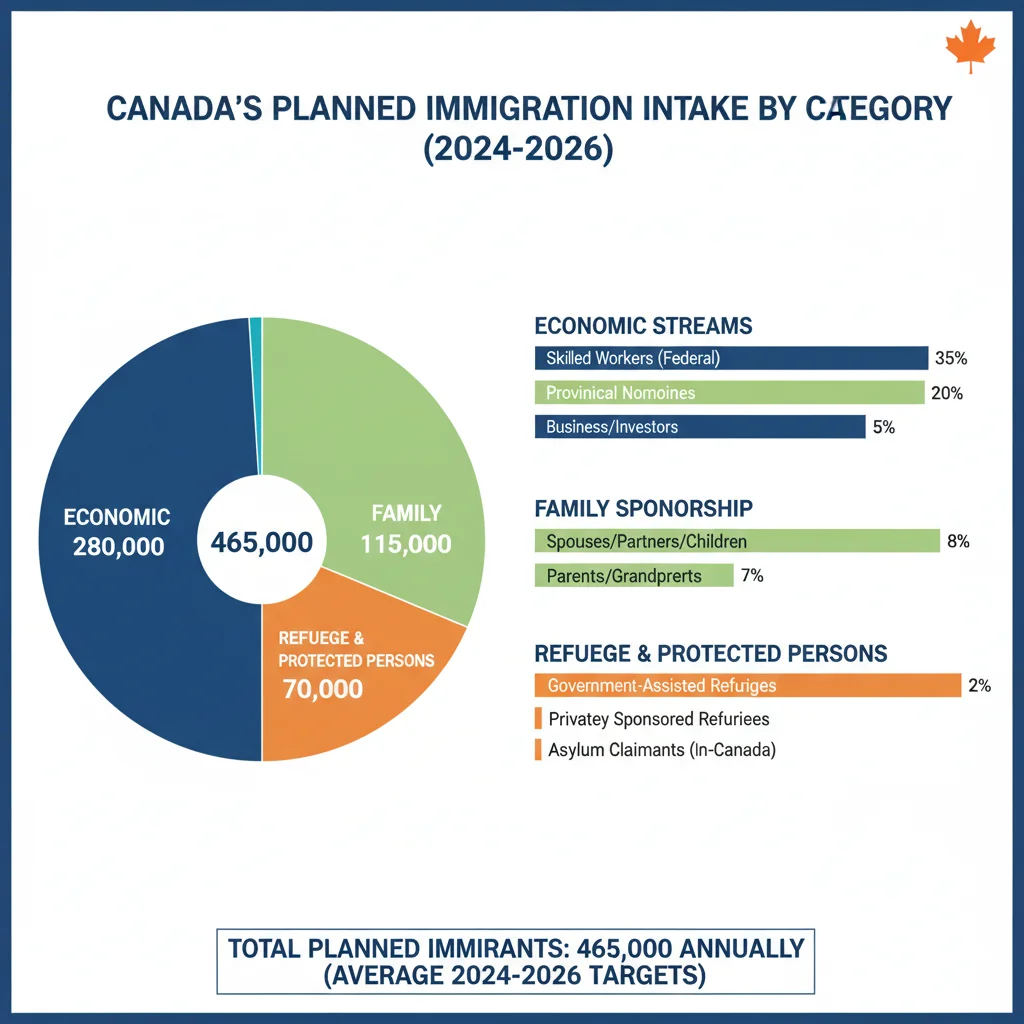
The Canada Immigration Plan is built upon several key pillars, each designed to achieve specific objectives while contributing to the overarching goal of welcoming 500,000 permanent residents annually. Economic immigration remains the primary focus, aiming to attract skilled workers who can address critical labor market needs. This stream is vital for sustaining Canada’s economic growth and innovation. The government recognizes that a strong economy depends on a steady supply of skilled individuals.
Family reunification is another cornerstone of the strategy, reflecting Canada’s humanitarian values and commitment to keeping families together. This pillar allows Canadian citizens and permanent residents to sponsor their relatives, fostering social cohesion and providing a strong support system for newcomers. The ability to bring family members to Canada significantly aids in the successful integration of immigrants into Canadian society, providing emotional and practical assistance.
Furthermore, Canada continues its tradition of offering protection to refugees and vulnerable persons. This humanitarian pillar ensures that Canada remains a safe haven for those fleeing persecution, war, and disaster. While economic and family streams account for the majority of immigrants, the refugee program demonstrates Canada’s global responsibility and compassion. Each of these pillars is carefully balanced to create a comprehensive and equitable immigration system that serves both national interests and humanitarian principles.
Economic Immigration Streams and Opportunities
Economic immigration streams are at the forefront of Canada’s plan to welcome 500,000 newcomers each year. These programs are specifically designed to attract individuals with the skills, education, and work experience needed to contribute directly to the Canadian economy. The Express Entry system, which manages applications for several federal economic programs, continues to be a crucial pathway for many skilled workers. It assesses candidates based on factors like age, education, language proficiency, and work experience, awarding points to determine eligibility.
Beyond Express Entry, Provincial Nominee Programs (PNPs) play an increasingly significant role. These programs allow individual provinces and territories to nominate candidates who meet their specific labor market and economic development needs. PNPs are particularly effective in distributing immigrants across the country, ensuring that smaller communities and regions also benefit from the influx of skilled labor. This localized approach helps address regional disparities in labor demand and promotes more balanced growth.
Key Economic Immigration Pathways:
Federal Skilled Worker Program: For skilled workers with foreign experience who wish to immigrate permanently.
Canadian Experience Class: For skilled workers who have Canadian work experience.
Provincial Nominee Programs (PNPs): Tailored programs allowing provinces to select immigrants based on local needs.
Atlantic Immigration Program: Supports immigration to Canada’s Atlantic provinces to fill labor gaps.
These various streams offer diverse opportunities for skilled professionals, tradespeople, and entrepreneurs to build new lives in Canada. The government continuously monitors labor market trends to adjust these programs, ensuring they remain responsive to the evolving needs of Canadian industries. This adaptability is key to the success of the overall Canada Immigration Plan and its ability to deliver economic benefits.
Impact on Canadian Society and Infrastructure
Welcoming 500,000 new permanent residents annually will undoubtedly have a profound impact on Canadian society and infrastructure. While the economic benefits are a primary driver, the social implications are equally important. Increased immigration brings enhanced cultural diversity, enriching communities with new perspectives, traditions, and languages. This cultural exchange is a hallmark of Canadian identity, fostering a more vibrant and inclusive society.
However, such a significant increase also presents challenges related to infrastructure and social services. Housing affordability, access to healthcare, and educational resources are areas that will require careful planning and investment. The federal government is committed to working with provincial and municipal governments to ensure that these essential services can adequately support the growing population. This collaborative approach is critical for successful integration and preventing strain on existing resources.
Moreover, the integration of newcomers requires robust settlement services, including language training, employment support, and community orientation programs. These services are crucial for helping immigrants navigate their new environment and become contributing members of society quickly. The success of the Canada Immigration Plan will largely depend on the effectiveness of these support systems and the willingness of communities to embrace and assist new arrivals. It’s a collective effort that involves all levels of government and civil society organizations.
Challenges and Future Outlook for Canada Immigration
While Canada’s ambitious immigration targets present numerous opportunities, they also come with a set of challenges that need careful management. One of the most significant concerns is ensuring that the necessary infrastructure and social services can keep pace with rapid population growth. This includes adequate housing, healthcare, public transportation, and educational facilities. Without proper planning and investment, an increased influx of immigrants could strain existing resources and lead to social pressures.
Another challenge lies in the recognition of foreign credentials and the effective integration of skilled immigrants into the Canadian labor market. Despite high demand for skilled workers, many newcomers face difficulties having their international qualifications recognized, leading to underemployment. The government and professional bodies are working to streamline these processes, but it remains an ongoing area of focus. Ensuring that immigrants can quickly utilize their skills is vital for both their success and Canada’s economic benefit.
The future outlook for Canada immigration remains largely positive, with a strong commitment from the government to maintain high immigration levels. The emphasis will likely continue to be on economic immigration, tailored to address specific labor shortages and regional needs. Continuous monitoring and adaptation of policies will be essential to respond to evolving global circumstances and domestic requirements. Canada’s proactive approach to immigration positions it well to navigate demographic shifts and secure its long-term prosperity. The success of the Canada Immigration Plan will be a testament to its ability to adapt and innovate.
Frequently Asked Questions
What is the primary goal of Canada’s new immigration plan?
The main goal is to address labor shortages, stimulate economic growth, and maintain Canada’s demographic balance by welcoming 500,000 new permanent residents annually over the next three years.
Which immigration streams are prioritized under this plan?
Economic immigration streams, including the Express Entry system and Provincial Nominee Programs, are highly prioritized to attract skilled workers. Family reunification and humanitarian programs also remain key components.
How will Canada manage the increased demand for housing and services?
The federal government is collaborating with provincial and municipal authorities to invest in infrastructure, housing, healthcare, and settlement services to accommodate the growing population and ensure successful integration.
What are the potential benefits of this immigration target for Canada?
Benefits include filling critical labor gaps, boosting economic productivity, fostering innovation, enriching cultural diversity, and counteracting the effects of an aging population.
Are there specific regions in Canada that will benefit most from this plan?
Provincial Nominee Programs (PNPs) are designed to distribute immigrants across various regions, ensuring that provinces and territories with specific labor needs can attract the talent required to support their local economies.
Canada’s bold new immigration plan, targeting 500,000 permanent residents annually, signifies a clear vision for the nation’s future. This comprehensive strategy is designed to address critical labor shortages, drive economic growth, and enrich the country’s social fabric through increased diversity. By prioritizing economic streams, maintaining strong family reunification programs, and upholding humanitarian commitments, Canada aims to build a stronger, more vibrant society. The strategic approach to the Canada Immigration Plan reflects a deep understanding of the benefits that newcomers bring to every aspect of national life.
While challenges related to infrastructure and integration will require ongoing attention and collaboration across all levels of government, the commitment to these ambitious targets underscores Canada’s confidence in its ability to successfully welcome and integrate a large number of immigrants. This plan offers immense opportunities for individuals seeking a new home and for Canada to continue its trajectory as a global leader in economic prosperity and social inclusion. As the plan unfolds, its success will be a testament to Canada’s enduring spirit of openness and its belief in the power of immigration to shape a brighter future.
pedropadm2025@gmail.com
Peter B holds a degree in Journalism and has 5 years of experience covering U.S. economic policy, labor markets, and financial news. He writes data-driven news content on topics like inflation, interest rates, and employment trends.