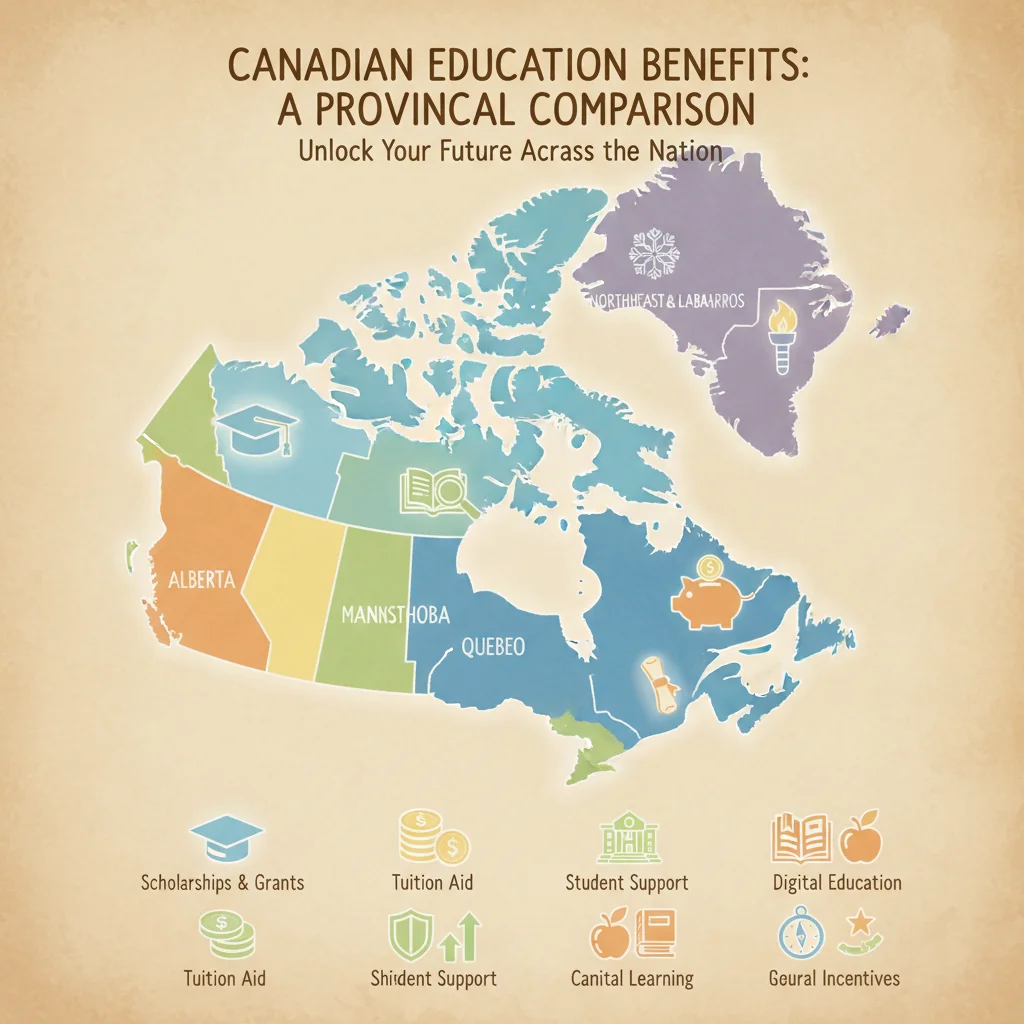
Navigating Provincial Education Benefits for 2026 admissions can be complex. This guide compares 10 key programs across Canadian provinces, highlighting grants, loans, and scholarships to help students fund their post-secondary education effectively.
By: Michael Sete on August 22, 2026
Última atualização em: agosto 24, 2026
Planning your post-secondary education in Canada for 2026 admissions involves many considerations, not least of which is funding. Understanding the various Provincial Education Benefits available can significantly ease the financial burden. Each Canadian province and territory offers unique programs designed to support students, ranging from grants and loans to scholarships and bursaries. These benefits play a crucial role in making higher education accessible and affordable for thousands of students every year.
Navigating these different provincial programs can seem daunting at first glance. However, taking the time to research and compare what each province offers can unlock substantial financial aid. This article will compare 10 key provincial education benefits across Canada, providing a clearer picture of what prospective students can expect for the upcoming 2026 academic year. We will delve into specific examples, highlighting the distinct approaches provinces take to support their student populations.
Ontario Student Assistance Program (OSAP)
The Ontario Student Assistance Program, widely known as OSAP, is one of Canada’s most comprehensive provincial education benefits programs. It offers a combination of grants and loans to help eligible Ontario residents pay for college or university. Eligibility for OSAP depends on various factors, including family income, tuition costs, and whether the student is attending full-time or part-time. For 2026 admissions, students will need to apply online through the OSAP portal, providing detailed financial information to assess their need.
OSAP is designed to provide financial aid that covers tuition, books, living expenses, and other educational costs. A significant portion of OSAP funding comes in the form of grants, which do not need to be repaid. The remaining portion is typically a student loan, which accrues interest and must be repaid after graduation. The exact mix of grants and loans varies greatly from student to student based on their individual financial circumstances, making it a highly personalized support system. It’s crucial for applicants to accurately report all financial information to ensure a fair assessment of their entitlement.
Key Components of OSAP
Ontario Student Grants: Non-repayable funds based on financial need, family income, and program costs.
Ontario Student Loans: Repayable funds provided by the provincial and federal governments.
Specialized Grants: Additional grants for students with disabilities, Indigenous students, and those with dependents.
Micro-credentials Funding: Support for short-duration training programs leading to specific skills.
Understanding the intricacies of OSAP is vital for any student considering post-secondary education in Ontario. The program undergoes periodic reviews and adjustments, so staying updated on the latest policies for the 2026 intake is highly recommended. The goal of OSAP remains to reduce financial barriers to higher education, allowing more students to pursue their academic and career aspirations.
British Columbia Student Aid
British Columbia Student Aid provides a robust system of financial assistance for students pursuing post-secondary education within the province. This program aims to ensure that eligible B.C. residents have access to the funds necessary to cover their educational and living expenses. Similar to other provincial education benefits, the aid package typically comprises both grants and student loans, with the specific amounts determined by financial need, program of study, and family circumstances. Students applying for 2026 admissions should begin gathering their financial documents well in advance to streamline the application process.
The application for British Columbia Student Aid is consolidated, meaning a single application assesses eligibility for both federal and provincial funding. This integrated approach simplifies the process for students, allowing them to focus more on their studies and less on navigating multiple application portals. The province places a strong emphasis on supporting students from low-income families and those with specific needs, offering targeted grants that do not require repayment. These grants can significantly reduce the overall debt burden for many graduates.
A key aspect of British Columbia Student Aid is its commitment to providing flexible repayment options once students complete their studies. This includes grace periods and interest relief programs designed to help graduates manage their loan obligations during the initial stages of their careers. The provincial government continuously reviews and updates its policies to better serve the needs of its diverse student population, adapting to economic changes and educational trends. Students are encouraged to explore the program’s official website for the most current information regarding eligibility and application deadlines for 2026.
Alberta Student Aid
Alberta Student Aid stands as a crucial support system for students seeking higher education within the province, offering a variety of financial assistance options. This program is designed to help cover the costs of tuition, fees, books, supplies, and living expenses for eligible Albertans. Like many other Canadian provinces, Alberta’s approach to student aid combines non-repayable grants with repayable loans, tailored to the individual financial situation of each applicant. For those planning to attend post-secondary institutions in 2026, understanding the application timelines and required documentation is paramount.
The provincial government of Alberta is committed to making education accessible, and its student aid programs reflect this goal. Alberta Student Aid assesses financial need based on a comprehensive review of income, assets, and educational costs. Students with demonstrated financial need are prioritized for grant funding, which can significantly reduce the amount of money they need to borrow. This focus on grants helps to alleviate the long-term financial pressure on graduates, allowing them to start their careers with less debt. Specific grants are also available for students with disabilities, those with dependents, and Indigenous students, ensuring equitable access to education.
Beyond traditional loans and grants, Alberta also offers various scholarship programs that recognize academic achievement, community involvement, and specific fields of study. While not strictly part of the core student aid package, these scholarships complement the provincial education benefits by providing additional funding opportunities. Students are encouraged to explore these options in conjunction with their main student aid application. The province regularly updates its student aid policies and offerings, so prospective 2026 students should consult the official Alberta Student Aid website for the most accurate and up-to-date information on eligibility, application procedures, and available funding streams.
Quebec Financial Assistance for Education
Quebec’s Financial Assistance for Education, often referred to as Aide financière aux études (AFE), offers a distinctive model among Canadian provincial education benefits. This program provides loans and bursaries to Quebec residents pursuing vocational, college, or university studies. The unique aspect of AFE is its emphasis on bursaries, which are non-repayable, making it a particularly attractive option for many students. Eligibility for AFE is primarily based on financial need, determined by factors such as family income, marital status, and the number of dependents. Students aiming for 2026 admissions should familiarize themselves with Quebec’s specific application procedures and deadlines.
AFE aims to ensure that no qualified Quebec resident is denied access to education due to financial constraints. The program’s calculation of financial assistance is comprehensive, taking into account various expenses including tuition, living costs, and study materials. Unlike some other provinces where loans might form a larger proportion of the aid package, Quebec often prioritizes bursaries, especially for students from lower-income backgrounds. This policy significantly reduces the amount of student debt graduates accumulate, supporting their transition into the workforce with greater financial freedom. The government regularly adjusts the program’s parameters to reflect changes in living costs and educational expenses.
Another notable feature of AFE is its support for part-time students and those studying abroad, provided their program meets specific criteria. This flexibility allows a broader range of students to benefit from provincial assistance. The application process is typically online, requiring detailed financial disclosures and proof of residency. Students are strongly advised to submit their applications well before the academic year begins to ensure timely processing of funds. Staying informed about any changes to AFE policies for the 2026 academic year through the official website is crucial for maximizing the benefits received.
Saskatchewan Student Aid Fund
The Saskatchewan Student Aid Fund provides essential financial support to residents of Saskatchewan who are pursuing post-secondary education. This program, like many other provincial education benefits, is designed to make higher education more accessible by helping students manage the costs associated with their studies. It offers a combination of provincial student loans and grants, with eligibility primarily determined by demonstrated financial need. Students planning to apply for 2026 admissions should review the specific requirements and application timelines set by the Saskatchewan government to ensure they meet all criteria.
The provincial government of Saskatchewan is dedicated to fostering an educated workforce, and the Student Aid Fund plays a pivotal role in achieving this goal. The program assesses a student’s financial need by considering their income, assets, and the costs of their chosen program. Grants are typically awarded to students with the highest financial need and do not need to be repaid, offering significant relief from educational expenses. These grants can cover various costs, including tuition, books, and living expenses, making a substantial difference in a student’s ability to focus on their studies without undue financial stress.
Saskatchewan also offers targeted programs within its Student Aid Fund, such as those for students with permanent disabilities and Indigenous students, ensuring that support is tailored to diverse needs. These specialized grants and services aim to remove barriers to education, promoting inclusivity and equal opportunity. Furthermore, the province provides various repayment assistance programs for student loans, designed to help graduates manage their debt effectively once they enter the workforce. These programs can include interest relief and reduced monthly payments, depending on the borrower’s income. It is highly recommended for all prospective students to visit the official Saskatchewan Student Aid website for the most current information regarding application procedures, deadlines, and the specific types of aid available for the 2026 academic year.
Manitoba Student Aid
Manitoba Student Aid offers financial assistance to eligible residents of Manitoba pursuing post-secondary education, aiming to remove financial barriers and promote access to higher learning. This program provides a combination of provincial and federal student loans and grants, designed to cover various educational and living expenses. For students considering 2026 admissions, understanding the eligibility criteria and application process for Manitoba Student Aid is a critical first step. The amount of aid a student receives is largely based on their assessed financial need, taking into account tuition costs, living expenses, and family income.
The provincial government of Manitoba is committed to supporting its students, and this is reflected in the structure of their student aid program. Grants, which do not need to be repaid, are a significant component of the aid package for students demonstrating the highest financial need. These grants can substantially reduce the overall debt burden, making education more affordable. In addition to general grants, specific grants are available for students with permanent disabilities, students with dependants, and other particular circumstances, ensuring that a broad range of students can access the support they require. The goal is to create an equitable playing field for all aspiring learners.
Manitoba Student Aid also provides comprehensive information on scholarship and bursary opportunities available through various institutions and organizations within the province. While these are separate from the core student aid program, they serve as valuable additional funding sources that can complement provincial education benefits. Furthermore, the program offers repayment assistance options for student loans, which can be crucial for graduates as they transition into their careers. These options are designed to help borrowers manage their loan payments during periods of financial difficulty. Prospective students for the 2026 academic year should consult the official Manitoba Student Aid website for the most up-to-date information on how to apply, eligibility requirements, and available funding.
Nova Scotia Student Assistance
Nova Scotia Student Assistance provides financial support to residents of Nova Scotia who are enrolled in approved post-secondary programs. This program is a vital resource for students looking to pursue higher education, offering a blend of provincial and federal loans and grants. The aim is to alleviate the financial stress associated with tuition, books, and living costs, making education more accessible across the province. Students planning for 2026 admissions should pay close attention to the application timelines and required documentation to ensure they can access these provincial education benefits.
The Nova Scotia government is dedicated to investing in its future workforce through accessible education. The student assistance program evaluates each applicant’s financial need comprehensively, considering factors such as family income, number of dependents, and the specific costs of their program. Non-repayable grants are a key feature of the program, particularly for students from lower-income backgrounds, significantly reducing the amount of debt they will incur. These grants are designed to directly offset educational expenses, providing immediate financial relief.
Beyond the standard loans and grants, Nova Scotia Student Assistance also offers targeted programs. This includes additional support for students with permanent disabilities, helping to cover costs related to their specific educational needs. There are also specific initiatives aimed at supporting Indigenous students in their pursuit of post-secondary education. The province also provides various repayment assistance programs for student loans, which can be invaluable for graduates. These programs offer flexibility and support during times of financial challenge, ensuring that loan repayment is manageable. For the most current information regarding eligibility, application processes, and available aid for the 2026 academic year, students are encouraged to visit the official Nova Scotia Student Assistance website.
New Brunswick Student Financial Services
New Brunswick Student Financial Services offers a range of financial aid programs designed to assist residents of the province in accessing post-secondary education. This comprehensive system provides a combination of provincial and federal student loans and grants, aiming to cover tuition, living expenses, and other educational costs. For students targeting 2026 admissions, understanding the specific criteria and application procedures for these provincial education benefits is crucial. The amount of aid awarded is primarily based on an assessment of financial need, taking into account income, assets, and the cost of the chosen program.
The government of New Brunswick is committed to supporting its students and fostering a skilled workforce. The financial aid program prioritizes non-repayable grants for students who demonstrate the greatest financial need. These grants play a significant role in reducing the overall debt burden for many students, making higher education a more attainable goal. Specific grant opportunities are also available for students with permanent disabilities, as well as those with dependents, ensuring that a wide array of students can receive tailored support. This inclusive approach helps to remove common barriers to accessing education.
In addition to grants and loans, New Brunswick Student Financial Services provides information on various scholarships and bursaries offered by institutions and external organizations. While these are supplementary, they can provide valuable additional funding to complement the provincial aid. The province also offers robust repayment assistance programs for student loans, which can be critical for graduates entering the workforce. These programs are designed to help manage loan payments during periods of financial difficulty, including options for interest relief and reduced payments. Prospective students for the 2026 academic year should visit the official New Brunswick Student Financial Services website for detailed information on eligibility, application deadlines, and the specific types of aid available.
Prince Edward Island Student Financial Services
Prince Edward Island Student Financial Services provides financial assistance to eligible residents of the province who are pursuing post-secondary education. This program is essential for students seeking to manage the costs associated with their studies, offering a blend of provincial and federal student loans and grants. For those planning for 2026 admissions, it is important to understand the specific eligibility requirements and the application process. The amount of financial aid a student receives is determined by a thorough assessment of their financial need, considering factors such as family income, tuition fees, and living expenses.
The government of Prince Edward Island is dedicated to making higher education accessible to all its residents. The student financial services program places a strong emphasis on providing non-repayable grants to students who demonstrate significant financial need. These grants are instrumental in reducing the overall cost of education and minimizing the amount of debt students accumulate. Such support allows students to focus more on their academic pursuits without the constant worry of financial strain. Specific grants are also available to assist students with permanent disabilities, helping to cover additional costs related to their educational journey.
Beyond the core offerings of loans and grants, Prince Edward Island Student Financial Services also provides guidance on other funding opportunities, such as scholarships and bursaries from external sources. These can serve as valuable additions to a student’s financial aid package. The province also offers comprehensive repayment assistance programs for student loans, which are designed to support graduates as they enter the workforce. These programs can include options for interest relief and flexible payment plans, ensuring that loan repayment remains manageable. For the most up-to-date information on eligibility, application deadlines, and available funding for the 2026 academic year, students are strongly encouraged to consult the official Prince Edward Island Student Financial Services website.
Newfoundland and Labrador Student Aid
Newfoundland and Labrador Student Aid offers financial assistance to residents of the province who are pursuing approved post-secondary programs. This vital program provides a combination of provincial and federal student loans and grants, aiming to support students with the costs of tuition, books, and living expenses. For students considering 2026 admissions, it is crucial to familiarize themselves with the specific eligibility criteria and application process for these provincial education benefits. The level of aid a student receives is determined by an assessment of their financial need, taking into account various factors like family income and educational costs.
The government of Newfoundland and Labrador is committed to fostering an educated population and recognizes the importance of accessible higher education. The student aid program prioritizes non-repayable grants for students who demonstrate the greatest financial need. These grants are a cornerstone of the provincial support system, significantly reducing the financial burden on students and their families. By minimizing the amount of debt incurred, these grants enable more students to pursue and complete their studies. Specialized grants are also available for students with permanent disabilities, providing additional funding to address specific educational challenges.
In addition to grants and loans, Newfoundland and Labrador Student Aid provides information on other potential funding sources, such as scholarships and bursaries offered by educational institutions and other organizations. These supplementary funds can further enhance a student’s financial stability during their studies. The province also offers various repayment assistance programs for student loans, which are designed to help graduates manage their debt obligations effectively. These programs can include options for interest relief and reduced monthly payments, depending on the borrower’s financial situation. Prospective students for the 2026 academic year should visit the official Newfoundland and Labrador Student Aid website for the most accurate and current information on how to apply, eligibility, and available funding streams.
Frequently Asked Questions
What is the difference between a grant and a loan?
A grant is a form of financial aid that does not need to be repaid. It is typically awarded based on financial need, academic merit, or specific criteria. A loan, on the other hand, is borrowed money that must be repaid, usually with interest, after a student completes their studies or leaves school.
How do I apply for provincial education benefits?
Most provincial education benefits programs have an online application portal. You will typically need to provide personal, financial, and educational information. It’s crucial to apply well before the academic year begins and submit all required documentation accurately.
Can I receive provincial education benefits if I’m studying part-time?
Yes, many provinces offer financial assistance for part-time students, though the eligibility criteria and the amount of aid may differ from full-time student programs. It’s important to check the specific requirements of your province’s student aid program.
What happens if I can’t repay my student loan?
Most provincial and federal student loan programs offer repayment assistance options. These can include interest relief, reduced monthly payments, or even temporary payment deferrals, depending on your financial situation after graduation. It’s important to contact your student loan provider if you face difficulties.
Are international students eligible for provincial education benefits?
Generally, provincial education benefits are primarily for Canadian citizens, permanent residents, or protected persons who meet specific residency requirements in that province. International students usually have different funding options, such as international scholarships or their home country’s aid programs.
Exploring the diverse landscape of Provincial Education Benefits across Canada is a crucial step for any student planning for 2026 admissions. From Ontario’s comprehensive OSAP to Quebec’s bursary-focused AFE, and the tailored support systems in British Columbia, Alberta, Saskatchewan, Manitoba, Nova Scotia, New Brunswick, Prince Edward Island, and Newfoundland and Labrador, each province offers unique opportunities to make higher education more affordable. These programs, which combine non-repayable grants with accessible student loans, are designed to alleviate financial burdens, allowing students to focus on their academic and career development.
Understanding the specific eligibility criteria, application processes, and available aid for each province is paramount. While the details may vary, the overarching goal of these provincial education benefits remains consistent: to ensure that financial constraints do not hinder a student’s pursuit of knowledge and skills. By diligently researching and applying for the appropriate programs, prospective students can unlock significant financial assistance, paving the way for a successful post-secondary journey. We encourage all students to visit the official government websites for the most current information and to start their application process early to maximize their chances of securing the necessary funding for their 2026 academic year.